
If you’re looking to buy your first turntable, there are two super popular options from Audio-Technica, the AT-LP60 vs the AT-LP120. Friends often ask me which one they should buy — the LP60 for around $199, or spend $300 more and get the LP120 for $499.
Hence to clear the doubt between the two, I decided to buy both turntables and do a side-by-side comparison to show you the differences and help you decide which one fits your budget and needs.
I’ll also share which one I personally prefer and whether there is a real sound difference between the two or not. Hence, Stay tuned!
Audio-Technica LP60 vs LP120 : The Comparison
Now, let’s look at the pros and cons I found by comparing both turntable models.
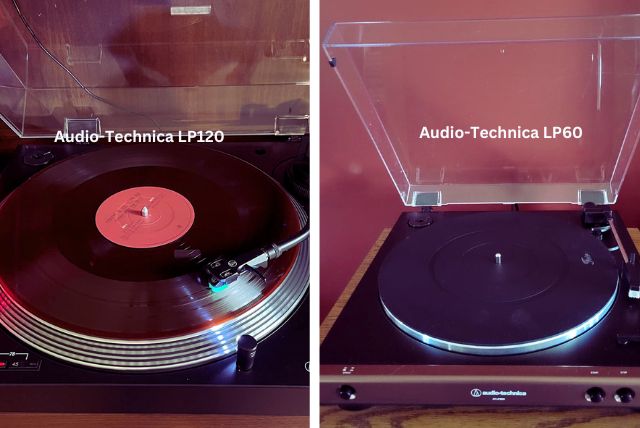
Size and Build
The first thing you notice when you put both turntables side by side is that the LP60 has a smaller footprint. This can be a big deal if you don’t have much space and you’re buying your first turntable. If space is limited, the LP60 might be the better choice.
But the LP120 is bigger and heavier for a reason — and that reason has to do with sound quality. The extra weight helps reduce vibrations, which can improve playback.
Drive Mechanism: Belt Drive vs Direct Drive
One major difference between the two is how they spin the platter.
The LP60 uses a belt drive. That means it needs a belt to spin the platter. The belt is easy to install, but over time it can stretch or wear out, which can affect the sound and require replacement.
While the LP120 on the other hand, is a direct drive turntable. This means the motor is attached directly to the platter and there is no belt. If you don’t want to deal with belts, the LP120 is the more convenient option.
There’s a long debate about whether direct drive or belt drive sounds better, and its a blog post in itself.
Automatic vs Manual Operation
This is a big deciding point for many beginners. The LP60 is fully automatic. When you press start, the tonearm lifts itself, moves to the record, and starts playing. When the record ends, the arm automatically returns and the turntable turns off. It’s super easy and beginner-friendly.
The LP120 on the other hand is fully manual. When you press start, the platter spins, but the arm stays at rest. You have to place the arm manually to start playing, and when the side ends, it will just sit there.
So you must watch the record to avoid wearing out the needle. If you press stop while it’s playing, it stops but the arm stays in place, and you have to move it manually.
This is a big difference and can affect which one you choose.
Built-in Preamp and Cartridge Upgrade
Both turntables come with a built-in phono preamp, so you don’t need to worry about that feature.
But there is a big difference with the cartridge: The cartridge on the LP60 is attached to the headshell and cannot be upgraded easily. When the needle wears out, you basically replace the whole cartridge.
The LP120 has a removable headshell and cartridge. This means you can upgrade the cartridge over time, which can improve sound quality significantly.
This feature becomes important later when you want to enhance your listening experience.
Speed Options
Another difference is speed options:
- LP60: 33 and 45 RPM only
- LP120: 33, 45, and 78 RPM (by pressing two buttons together)
So if you have old 78s and want to play them, the LP120 is the clear winner.
Weight and Vibration
The LP60 is lightweight and doesn’t have much “umph.” The LP120 is heavier and more solid, which helps reduce vibration and improve sound quality.
DJ Features
If you ever want to scratch or DJ, the LP120 has pitch control and can handle that. The LP60 is more of a simple plug-and-play table and doesn’t offer DJ features.
Which One Sounds Better?
If you’re wondering which one sounds better, here’s the honest answer:
Both sound pretty similar at first, especially straight out of the box. The direct drive vs belt drive debate isn’t a huge factor for most people.
Where the real difference lies is upgrading the cartridge.
Why the LP120 Can Sound Better?
Because the LP120 allows you to upgrade the cartridge, you can improve the sound over time. Different needles pick up different details in your vinyl, and upgrading can reveal new depth and clarity in your records.
With the LP60, you’re pretty much locked into the sound it comes with, because the cartridge cannot be upgraded easily.
My Suggestion
If you’re on a tight budget and just want a simple, easy-to-use turntable, the LP60 is a great starter option.
But if you have the money and want a turntable that will grow with you, the LP120 is the better choice. It gives you more features, upgrade options, and better long-term value.
Final Beat
So which one should you buy?
- LP60: Best for beginners, limited space, simple use
- LP120: Best for long-term use, upgrades, DJ features, and better build
I hope this comparison helps you decide which one is right for you.
If you have any other questions or want to dive deeper into vintage turntables or other options, feel free to ask! Till then keep spinning your favourite records! 🙂
Frequently Asked Questions
Q: Is LP120 really worth the extra money?
If you just want a simple turntable, the LP60 is enough. But if you want upgrades and better build, the LP120 is worth it.
Q: Can the LP60 play 78 RPM records?
No, the LP60 only supports 33 and 45 RPM.
Q: Is the LP120 better for DJs?
Yes, the LP120 has pitch control and is better suited for scratching or mixing.
Q: Do both turntables have built-in preamps?
Yes, both have built-in phono preamps.
Q: Which one is easier for beginners?
The LP60 is easier because it’s fully automatic.